
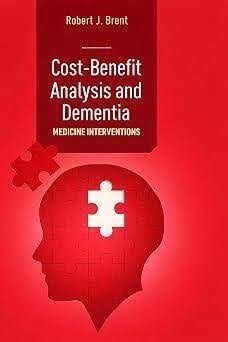
As dementia cases continue to rise worldwide, questions about treatment effectiveness are becoming increasingly important not only for patients and families, but also for healthcare systems facing growing financial pressures.
In his new book, Cost-Benefit Analysis and Dementia: Medicine Interventions, economist Robert J. Brent takes an unusual approach to the subject. Rather than asking only whether dementia medications work, he asks whether the benefits they provide are large enough to justify the resources spent on them.
Published by Anderson Publishers, the book evaluates several categories of medications commonly used by older adults with dementia, including FDA-approved dementia drugs, beta-blockers, antipsychotics, nonsteroidal anti-inflammatory drugs, and statins. Using data from the National Alzheimer’s Coordinating Center (NACC), Brent examines how these treatments affect dementia symptoms, mortality, and overall social welfare.
“Dementia has become one of the most significant health and economic challenges of our time,” Robert J. Brent says. “Healthcare decisions should be guided not only by evidence of effectiveness but also by evidence of value.”
The book builds on Brent’s earlier work evaluating non-pharmaceutical dementia interventions. While many studies focus on clinical outcomes alone, this research incorporates cost-benefit analysis to determine whether an intervention provides benefits that exceed its costs. According to Brent, this distinction is essential for policymakers responsible for deciding how limited healthcare resources should be allocated.
The findings are intended for healthcare professionals, health economists, researchers, government agencies, universities, and organizations involved in dementia care. Caregivers and advocates may also find the work valuable as public discussion continues around treatment options and long-term care strategies.
With dementia affecting millions of families and costing healthcare systems billions of dollars each year, the book contributes to a growing conversation about how society evaluates treatment success and healthcare investment.
About the Author
Robert J. Brent is Professor of Economics Emeritus at Fordham University in New York. Throughout his academic career, he has specialized in cost-benefit analysis, health economics, and public policy evaluation. His research has focused on helping decision-makers assess whether public programs and healthcare interventions produce benefits that justify their costs.
Media Contact:
Book Title: Cost-Benefit Analysis and Dementia: Medicine Interventions
Author: Robert J. Brent
Email: brent@fordham.edu
Phone: (718) 644-9175
Book Available: https://a.co/d/0anEpBIo
Social Media: https://www.facebook.com/Robert.J.Brent